How to Choose Diamond Earrings: Size, Fit and Carat Weight
Compare diamond earrings by size, fit and total carat weight. See GoldHaus examples showing pairs versus singles, left and right choices, and cuff dimensions.
The GoldHaus guide · Product details checked 18 October 2026
Choosing diamond earrings starts with more than the shape you like. The dimensions, how the piece sits on your ear, whether the listing includes one earring or two, and the meaning of the carat figure all affect what you receive. Use this guide to compare the details before choosing a design or arranging a visit to GoldHaus in Dubai.
Explore the GoldHaus earrings collection.
Start with the way you want to wear them
Think about the earrings you already reach for and what you want the new piece to add. A stud puts the diamond close to the lobe. A hoop frames it. A climber, cuff or chain design changes the line of the ear and can need a more specific fit.
- Studs: compare the stone's outline, the depth of the setting and the backing, as well as its weight.
- Hoops and huggies: ask for the inner diameter, width and fastening details. A close fit depends on your ear and piercing position.
- Climbers, cuffs and chains: check the intended placement, left or right orientation, and which parts are included. Ask whether the particular design requires a piercing.
A product close-up shows detail, while a photograph on an ear helps you judge scale. If a measurement is missing, ask the team rather than estimating it from the photograph.
Check whether you are buying a single or a pair
Never use the number of earrings in a photograph as the only guide to the selling unit. A listing can show both orientations so you can choose one.
For example, Glint Chain Stud Cuff is explicitly sold in singles. The product includes a pear stud and asks you to select the left or right ear. If you want to wear the design on both ears, confirm the two required selections with the team before ordering.

Also check whether a jacket or cuff is a complete earring, an attachment, or a piece to combine with another stud. Do not assume every part shown is included.
Separate each stone's weight from total carat weight
Carat measures diamond weight, not an earring's length or diameter. A total carat weight, often written ctw, can combine the diamonds in a design or a pair. Read the listing to find out which it means.
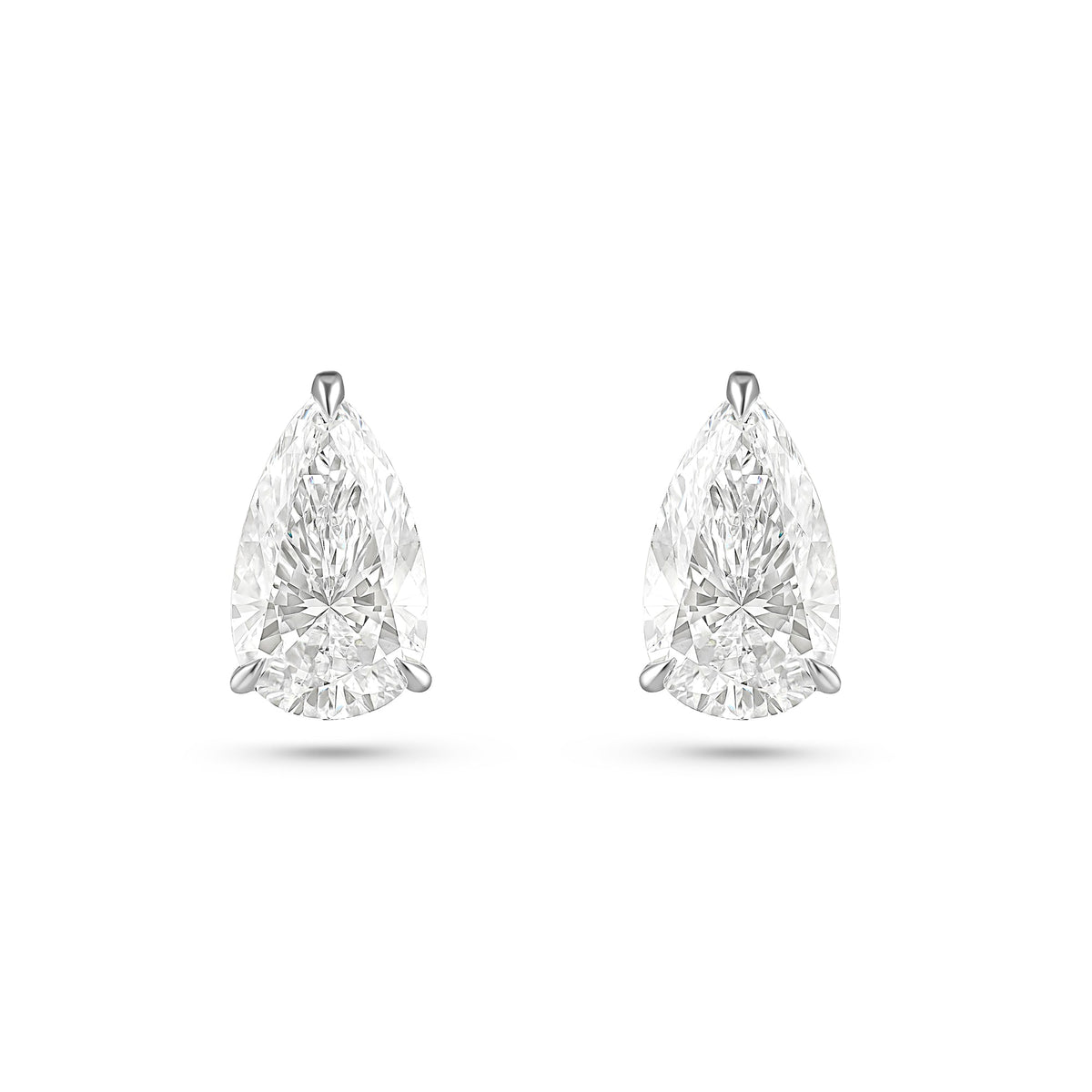
Pear Studs makes the distinction explicit: the size option 1 carat (2ctw) describes one carat for each of the two stones and two carats in total. Other size options have their own per-stone and combined weights. Select the option you intend to compare; do not read the pair's total as the size of each diamond.
For a design containing several smaller diamonds, the same total weight can be distributed differently. Ask for the visible dimensions and how the diamond weight is divided. Two earrings with the same ctw can have quite different silhouettes.
Use dimensions to compare the fit
Measurements answer different questions. Width describes how broad a piece looks; inner diameter describes the opening. Neither figure alone guarantees that a cuff or hoop will sit where you want it.
Twinkle Cuff illustrates the difference. Its listing gives a 4mm Slim width and a 6mm Thick width, with separate 8mm and 10mm inner-diameter choices. The options combine these measurements as Slim 8mm, Slim 10mm, Thick 8mm and Thick 10mm. Compare both measurements when choosing your version, then ask about the intended position on your ear.
For a stud, ask about the setting's height and how the back supports it. Pear Studs lists large jumbo backs; that detail belongs to that design and should not be assumed for every earring. Ask for the actual fastening on your chosen piece and how to use it.
Read the diamond and gold details for your chosen option
Cut, color, clarity and carat weight are useful starting points for diamond comparison. Shape describes the outline, such as pear or round; it is not the same as a cut grade. For a pair, ask how the two stones compare in dimensions and appearance.
GoldHaus listings may state a color or clarity range. Treat that as the specification supplied for the design, not an individual grading report for every diamond. If documentation is important to your purchase, ask which report is supplied, who issued it and which stone or finished piece it covers.
Check the selected metal as carefully as the diamonds. The three examples above offer 14k and 18k choices, with color options shown on their product pages. Confirm the combination you want instead of assuming that every photograph or listing represents the same gold option. For a broader explanation of origins and specifications, read the GoldHaus lab-grown diamond buying guide.
A short checklist before ordering
- Confirm the selling unit, quantity and any left or right selection.
- Check dimensions, placement, backing or closure, and any piercing requirements.
- Distinguish the weight of each diamond from total carat weight.
- Confirm your gold, color and size options, plus the documentation for that piece.
- Check current regional pricing on the product page and review the shipping and returns policy.
Production time, availability and customization depend on the piece. Ask the team about your specific request and planned date before ordering; the linked policy remains the place to check current terms.
Choosing diamond earrings in Dubai
If you want help comparing designs in person, request an appointment at our Downtown Dubai studio. Tell us which pieces, gold options and sizes you are considering so the team can confirm availability for your visit. Appointments require confirmation; requesting a visit does not reserve a piece or confirm a time.
Find your earrings or ask the GoldHaus team about a specific design.
Further reading: GIA on choosing diamond stud earrings and GIA on carat weight. GoldHaus examples refer to the product specifications checked on 18 October 2026; confirm the selected option before ordering.