How to Choose a Diamond Necklace: Length, Fit and Style
Choose a diamond necklace by length, fit and design. Compare GoldHaus examples, understand total carat weight and check whether a pendant includes its chain.
A diamond necklace should work with the way you dress and move. Before comparing stones, decide where you want the necklace to sit, whether you prefer one focal pendant or diamonds around the neckline, and whether you will wear it alone or with another chain.
This guide uses actual designs from the GoldHaus necklace collection to explain length, fit, diamond weight and what is included. If you are choosing a lab diamond necklace in Dubai, these checks can help you arrive at a studio appointment with a useful shortlist.
Choose the necklace format first
The arrangement changes the look as much as the diamond weight. Start with the outline you want against a favourite neckline.
- A single pendant creates one focal point. Compare the pendant's dimensions and the chain separately, especially when the chain is not included.
- Diamonds distributed along a chain spread the detail across the neckline. The space between the stones and the way the chain drapes become part of the design.
- A continuous diamond necklace creates a stronger line around the neck. Compare the whole necklace at the selected length rather than judging it by a close-up of one stone.
- A lariat adds a vertical drop. Check both the neck length and the drop, and try it with the clothing you expect to wear.
Find your length before choosing your stones
There is no single chain length that sits in the same place on everyone. Neck circumference, posture, the pendant and the neckline of your clothing all affect the result. A model photograph is a styling reference, not a guarantee of where the piece will fall on you.
- Take a necklace you already like and measure its full length laid straight, including the clasp. Note which fastening point you actually use.
- If you do not have a reference necklace, place a soft measuring tape loosely where you would like the chain to sit. Do not pull it tight.
- Compare that measurement with the exact design's listed lengths or adjustment points. Check that there is room to turn your head and move comfortably.
- Try the intended neckline. A pendant should have space to sit clearly rather than disappear behind the edge of a collar.
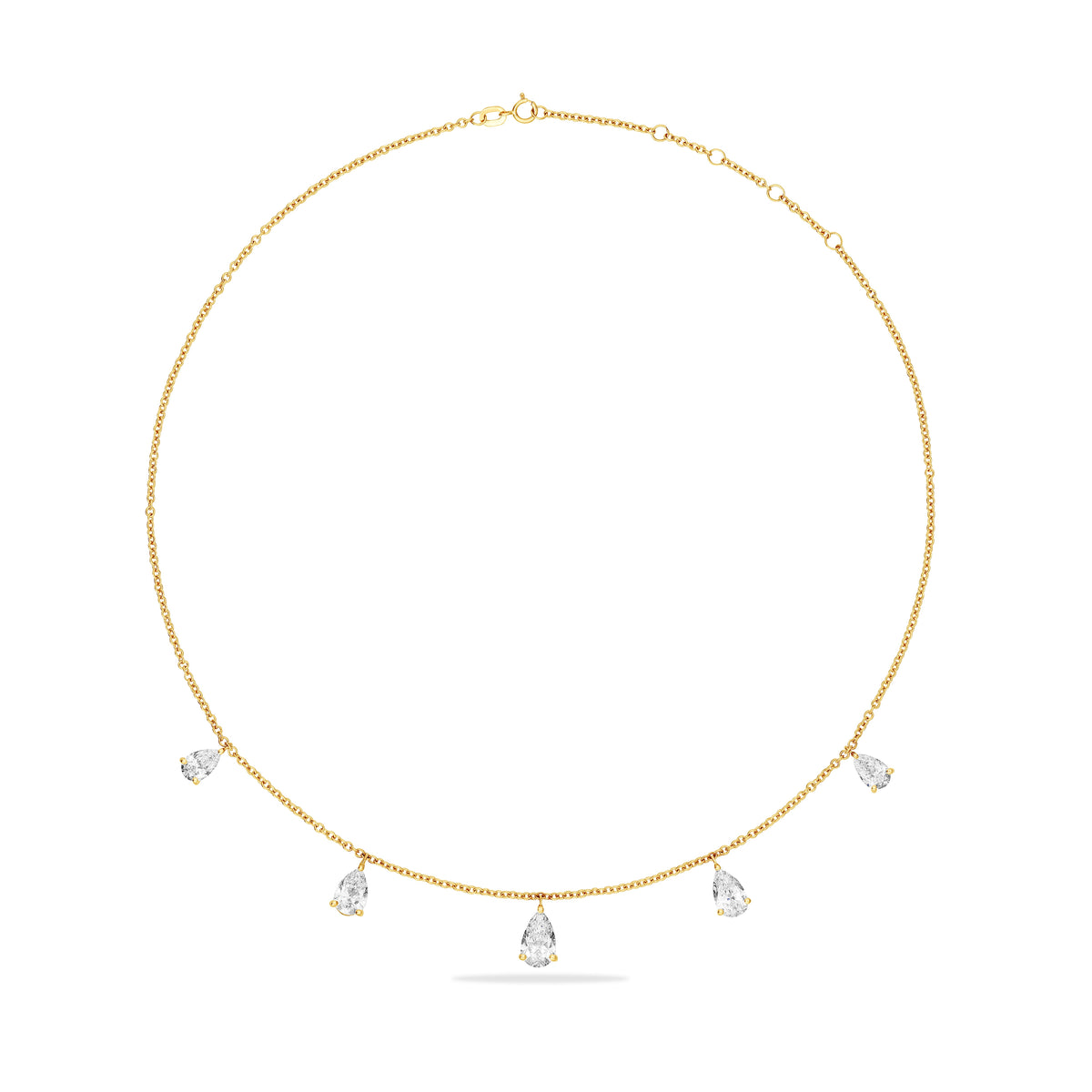
Cascade is a useful example of an adjustable design: its product specifications list clasp positions at 14, 14.5, 15, 15.5 and 16 inches. Those are fastening positions on this necklace, not five separate chains. Trying neighbouring positions can help you judge the balance between the centre stone and your neckline.

Separate centre-stone weight from total carat weight
Carat measures diamond weight, not the visible width of a pendant. Ask for the stone or pendant measurements in millimetres when scale is important. Two designs with similar carat weight can have different outlines because of the shape, proportions and surrounding metal.
Also distinguish the centre stone from total carat weight, often written as ctw. Cascade is listed with 5ctw of lab diamonds and a 1.5ct centre stone. The centre is part of the total; it is not a 5ct centre diamond. A necklace with many smaller stones should not be compared with a single-stone pendant using the total alone.
Length can change the total too. Lifesaver currently pairs its 15–16-inch option with 26ctw, its 16–17-inch option with 28ctw, and its 17–18-inch option with 30ctw. Choose the fit you want, then read the specifications for that exact option.
Check whether the chain is included
A pendant photograph may show a complete necklace even when the listing sells only the pendant. Read the product description and selected options before ordering.
Bowser, for example, is shown with a 3ct oval lab diamond and explicitly states that the chain is sold separately. If you want to use a chain you own, ask the team to check its thickness, clasp and compatibility with the pendant opening. Do not assume that any chain will fit or support any pendant.
For a gift, make a note of what the recipient already wears. If the chain is a separate purchase, confirm both parts rather than treating the photograph as a list of included items.
Choose the metal and consider layering
Look at the metal options for the specific piece. Lifesaver offers 14K and 18K choices, while Cascade's description specifies 18k gold. Yellow, rose and white gold also change the way the necklace looks beside your other jewellery. The 18k gold choosing and care guide explains what to check before selecting a metal.
For layering, try your existing necklace with the new design rather than relying on two length labels. Check that the pendants have room to move without repeatedly striking each other, and that clasps do not collect at the front. A lariat drop or larger pendant needs space below the main chain. One necklace worn clearly can be a better choice than a stack that constantly needs adjusting.
Make a practical shortlist for a Dubai studio visit
Bring two or three product links, your preferred length, a photograph of the neckline you want to wear, and details of any chain you intend to reuse. Ask about the exact stone dimensions, selected metal, clasp adjustment and included components. If you need a particular shape or length, confirm the available configuration with the team.
GoldHaus studio visits in Downtown Dubai are by appointment. See studio details and directions and contact the team to arrange a confirmed visit. Check the current shipping and returns policy before ordering. Product pages provide current pricing for your region and selected options.
Questions to ask before ordering
Which length should I choose for everyday wear?
Start with a necklace you already wear comfortably, then compare it with the intended design. Include the pendant or drop in your assessment. An adjustable piece gives you options, but its listed range still needs to suit your measurements.
Does a higher total carat weight mean a larger pendant?
No. Total carat weight can describe diamonds distributed across the whole necklace. Check the centre stone, pendant dimensions and overall arrangement separately.
Where can I learn more about lab-grown diamonds?
Read the GoldHaus lab-grown diamond guide, then explore the lab-grown diamond jewellery collection. For the necklace itself, use the current product specifications and selected options as your reference.
Diamond-weight reference: GIA's explanation of carat weight. GoldHaus product examples illustrate the choices described above.